Dr. Sarah Gostich: Total Ankle Replacement Antelope Valley
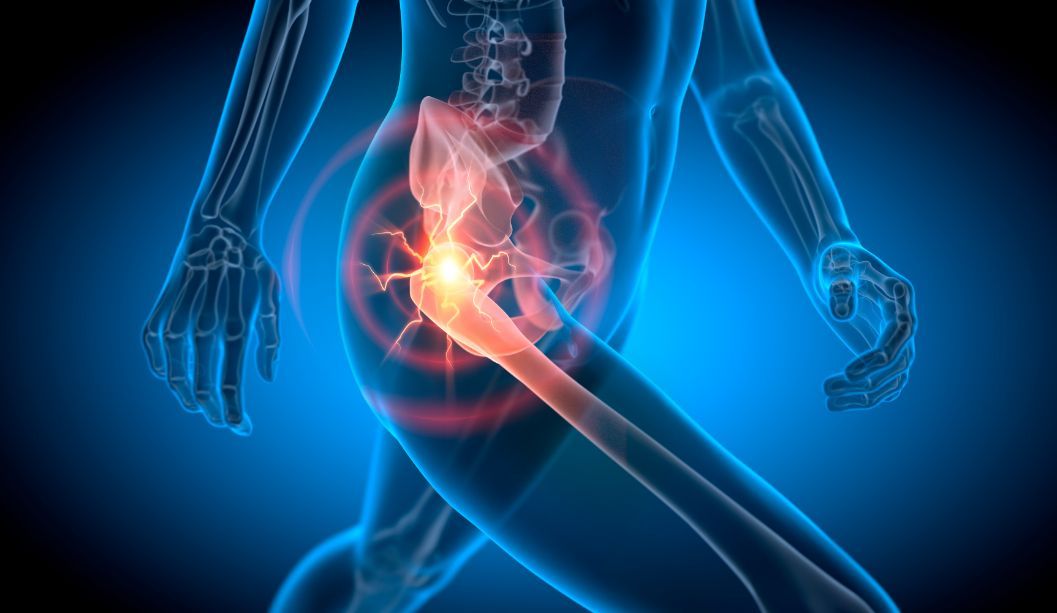
Your ankle throbs. Every single step feels like grinding glass.
For the active adults and weekend warriors of Lancaster and Palmdale, chronic ankle pain is more than a physical nuisance: it is an identity thief. It turns morning runs along the Primrose trail into painful memories. It transforms a simple round of golf at Rancho Vista into a multi-day recovery ordeal.
When conservative treatments like bracing, cortisone shots, and physical therapy stop working, you face a critical crossroads. For decades, the traditional medical answer to severe ankle arthritis was simple: lock the joint in place.
Today, advanced medicine offers a far better way forward.
If you want to protect your mobility, eliminate chronic pain, and get back to the lifestyle you love, it is time to look closely at advanced ankle arthroplasty. At AVORS Medical Group, we are helping patients reclaim their active lives through state-of-the-art joint restoration.
Ankle Fusion vs. Total Ankle Replacement: Why Mobility Wins
Historically, the gold standard for severe ankle pathology was ankle arthrodesis, commonly known as ankle fusion. In a fusion surgery, the worn-out cartilage is removed, and the bones of the joint are fastened together with plates and screws.
While fusion is highly effective at eliminating pain, it does so at a major cost: motion.
With ankle fusion, the procedure successfully eliminates pain but locks the joint, leading to a stiff gait and accelerated wear on your adjacent joints. Conversely, a total ankle replacement eliminates your pain while preserving natural joint motion, allowing for a normal walking gait and long-term joint protection.
When you fuse the ankle joint, you reduce its natural range of motion to 0 degrees. Because your foot can no longer flex naturally, your body must compensate. This places unnatural stress on your knees, hips, and the surrounding joints of the foot. Over time, this compensation frequently leads to secondary arthritis in those adjacent areas.
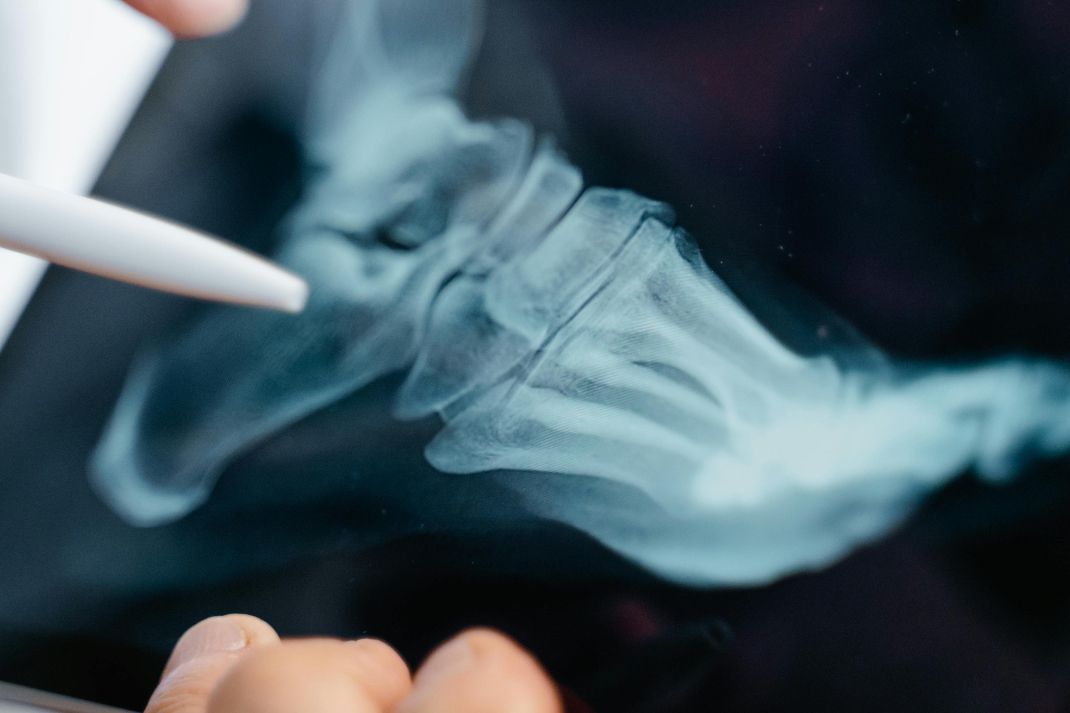
Alternatively, modern total joint replacement solutions prioritize the preservation of human mechanics. A total ankle replacement (TAR) replaces the damaged bone and cartilage with high-grade, low-friction implants.
The differences between the two approaches are clear:
- Natural Gait: Replacement preserves up to 15 degrees to 20 degrees of sagittal plane motion, letting you walk, run, and climb without a limp.
- Joint Protection: By maintaining natural movement, TAR shields your surrounding foot and knee joints from premature wear and tear.
- Active Rehabilitation: Maintaining joint mobility allows you to preserve muscle strength and balance far more effectively during recovery.
For active individuals who refuse to spend their lives on the sidelines, preserving joint motion is the ultimate goal.
Who is a Candidate for Total Ankle Replacement?
Ankle arthritis is rarely a quiet disease. It is often post-traumatic, meaning it stems from a severe injury you suffered years or even decades ago. A bad high school football fracture, a severe soccer sprain, or a heavy impact from an old car accident can slowly degrade your joint cartilage over time.
You may be an ideal candidate for Total Ankle Replacement in Lancaster, CA if you experience:
- Severe, bone-on-bone arthritis: This includes osteoarthritis, post-traumatic arthritis, or rheumatoid arthritis.
- Failed conservative care: Your pain persists despite custom orthotics, physical therapy, and anti-inflammatory treatments.
- Preserved ligament stability: Your surrounding ankle ligaments are strong enough to support an implant.
- A desire to remain active: You want to return to hiking, cycling, golfing, and low-impact athletic activities.
The Tech Edge: Precision with Stryker InBone & Infinity Systems
At AVORS Medical Group, we do not believe in one-size-fits-all surgeries. The human ankle is a complex, highly specialized joint. To ensure your implant fits your unique anatomy perfectly, we utilize the highly advanced Stryker InBone and Infinity systems.
This cutting-edge technology completely redefines how surgical procedures are planned and executed:
- Pre-Operative 3D Planning: Using advanced imaging, we create a precise three-dimensional digital model of your ankle before you ever enter the operating room.
- Custom-Fit Instrumentation: The system uses patient-specific guides tailored to your exact bone structure, allowing for sub-millimeter placement accuracy.
- Modular Designs: The Stryker InBone system features a modular stem design, allowing our surgeons to build a highly stable anchor custom-fitted to your natural tibia.
This level of technological precision translates directly to faster recovery times, less bone removal, and vastly improved long-term implant survival.

Meet Dr. Sarah Gostich, DPM: Your Antelope Valley Ankle Specialist
A successful joint replacement requires more than state-of-the-art implants; it requires an elite, fellowship-trained hand.
At the forefront of our advanced ankle program is Dr. Sarah Gostich, DPM, a highly respected, double board-certified foot and ankle surgeon practicing right here in the Antelope Valley.
Dr. Gostich brings an exceptional level of specialized training to Lancaster and Palmdale. Her practice focuses on complex reconstructive foot and ankle surgery, sports medicine, and total joint arthroplasty. What truly sets Dr. Gostich apart is her commitment to the active recovery of her patients. She understands that your goal isn't just to walk pain-free; it is to get back on the trail, return to the gym, and play with your grandchildren without limitation.
By choosing Dr. Gostich for your advanced ankle replacement surgery in Lancaster, you are partnering with an expert who combines board-certified precision with a deeply empathetic, patient-first philosophy.
The Road to Independence: What Recovery Looks Like
Getting your life back is a journey, and transparency is the key to a successful outcome. While total ankle replacement is a major procedure, modern protocols are designed to get you moving safely and quickly.
Here is what you can generally expect during your recovery timeline:
Phase 1: Protection and Healing (Weeks 1 to 3)
- The Goal: Protect the surgical site and manage swelling.
- The Reality: You will be strictly non-weight-bearing in a custom splint or cast. Keeping your leg elevated is your primary job during this phase.
Phase 2: Early Mobility (Weeks 4 to 6)
- The Goal: Introduce gentle movement and gradual weight-bearing.
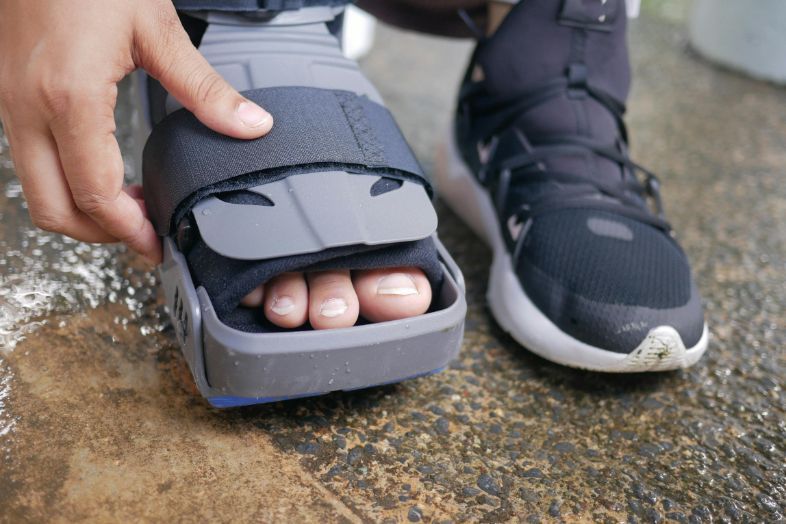
- The Reality: Under the guidance of Dr. Gostich, you will transition into a supportive walking boot. You will begin gentle range-of-motion exercises to prevent stiffness.
Phase 3: Active Rehabilitation (Weeks 6 to 12)
- The Goal: Build strength, restore balance, and normalize your walking pattern.
- The Reality: You will graduate back into supportive athletic shoes. This is where dedicated physical therapy takes center stage, retraining your muscles to support your new, fluid joint.
Phase 4: Returning to the Game (Months 3 to 6+)
- The Goal: Safely resume your active lifestyle.
- The Reality: Most patients return to low-impact sports, hiking, and daily active living with little to no pain.
Frequently Asked Questions
How long does a total ankle replacement implant last?
With modern advancements like the Stryker InBone and Infinity systems, the vast majority of total ankle implants are highly durable. Clinical studies indicate that modern implants have a survival rate exceeding $90\%$ at ten years, with many lasting much longer depending on your activity level and bone quality.
Is ankle replacement better than ankle fusion?
For patients who wish to preserve their natural walking motion and protect their surrounding joints from secondary arthritis, total ankle replacement is highly superior. However, patients with severe joint instability, active infections, or poor bone quality may still be better candidates for a fusion. A personalized evaluation with Dr. Gostich is the best way to determine your ideal path.
Do I need a primary care referral to see Dr. Sarah Gostich at AVORS?
This depends on your specific health insurance plan. Many PPO plans allow you to book a specialist consultation directly. If your plan requires a referral, our administrative team is highly experienced at coordinating with local primary care doctors to get you scheduled quickly.
Where is the ankle replacement surgery performed?
Dr. Gostich performs her surgeries in state-of-the-art local surgical facilities fully equipped with modern robotic and computer-assisted guidance systems, ensuring you do not have to travel down to Los Angeles for world-class orthopedic care.

Reclaim Your Movement: Schedule Your Evaluation Today
You do not have to accept chronic ankle stiffness as your new normal. You don't have to watch your friends hike the high desert trails while you stay in the car.
At AVORS Medical Group, our multidisciplinary team is dedicated to your complete recovery. Because an ankle replacement changes how your entire body moves, we look at the big picture. From the precision surgical work of Dr. Gostich to post-operative alignment support from our elite AVORS Chiropractic and Rehabilitation team, we ensure your entire musculoskeletal system is balanced, pain-free, and ready for action.
Let us help you transition from injury to independence.